Launch Day Load: How Video Game Release Events Are Creating Measurable Grid Stress

Photo by Photo by Francisco Gonzalez on Unsplash on Unsplash
At midnight on a major game release, millions of American households do something remarkably synchronized: they power on their consoles, spin up their routers to peak throughput, and settle in for sessions that can last well beyond sunrise. Individually, none of these actions registers as significant to a utility operator. Collectively, however, they constitute a demand event that is beginning to show up in load curve data in ways that were, until recently, largely unexplained.
The intersection of entertainment culture and power infrastructure is rarely discussed in grid planning circles. That may be changing.
Quantifying the Console Surge
Modern gaming hardware is not trivial in its energy demands. A current-generation gaming console operating under full load—running a graphically intensive title with an active internet connection—draws between 150 and 200 watts. Pair that with a large-screen display, a surround sound system, and a router handling sustained high-bandwidth traffic, and a single gaming setup can consume 300 to 450 watts continuously.
Scale that across the roughly 55 million active console households in the United States, even assuming only a fraction participate in a launch-day event, and the aggregate figure becomes meaningful. If just five percent of that base—approximately 2.75 million households—powers up simultaneously within a two-hour window, the combined draw approaches 825 megawatts to 1.2 gigawatts of added residential load. That is roughly equivalent to the output of a medium-sized natural gas peaker plant, appearing with little warning on a utility's load forecast.
Why Forecasting Models Miss It
Traditional utility load forecasting relies on historical weather data, time-of-day patterns, seasonal adjustments, and long-term demographic trends. What it does not account for is the entertainment calendar. Game release dates are announced months in advance, but that information sits entirely outside the data pipelines that feed most demand forecasting systems.
The result is a systematic blind spot. On the Tuesday or Friday a major title drops—release days in the gaming industry tend to cluster around those weekdays—residential load in high-density gaming regions can deviate from forecast by a statistically unusual margin. The deviation is not enormous by the standards of, say, a summer heat event, but it is consistent, repeatable, and growing as the gaming audience expands.
Regional concentration amplifies the effect. States like California, Texas, and Washington, which host large populations of young adults in dense urban and suburban environments, see more pronounced deviations than rural or older-demographic service territories. A utility serving the greater Seattle metro area, for instance, is likely to encounter a more detectable launch-day anomaly than one serving a rural Midwestern county.
The Streaming Multiplier
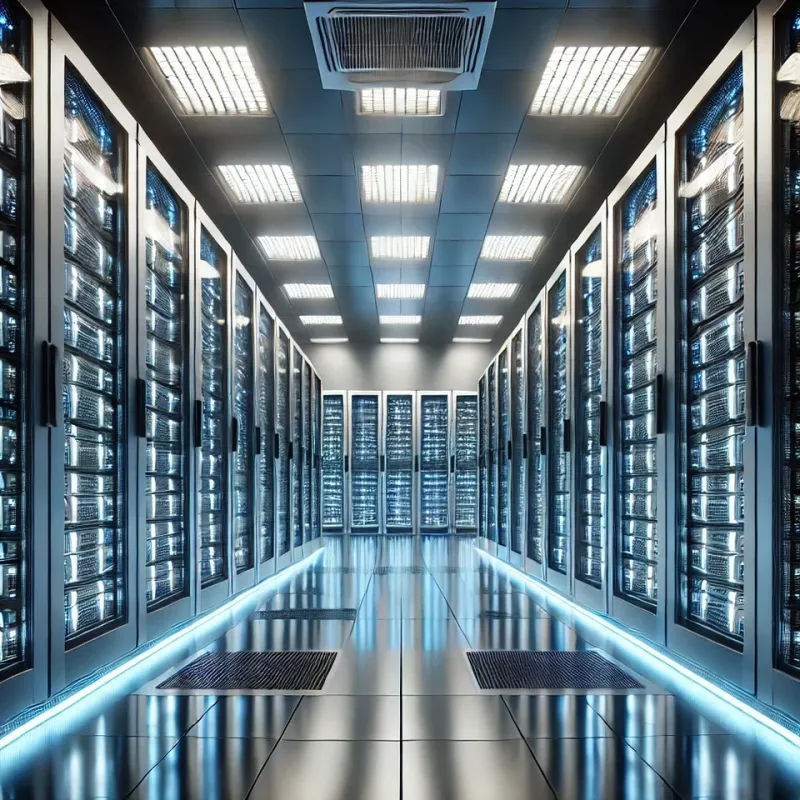
The energy equation does not end at the console. The rise of platforms such as Twitch and YouTube Gaming has introduced a secondary demand layer that compounds the primary gaming surge. When a high-profile game launches, viewership on streaming platforms often reaches peak levels simultaneously with active play. Viewers running a 4K stream on a large television, or monitoring a streamer on a secondary device while playing themselves, add incremental load that is invisible to any single utility but visible in aggregate network traffic data—and, by extension, in the data center power draw that supports those platforms.
Content delivery networks routing launch-day traffic at scale consume electricity in proportion to throughput. The data centers supporting a platform like Twitch during a record-breaking concurrent viewership event—figures that have exceeded 6 million simultaneous viewers for major gaming moments—are drawing power at levels that their operators plan for, but that grid operators serving those data center campuses may not have anticipated in their residential forecasts.
The demand is, in other words, double-layered: one spike at the consumer endpoint, another at the infrastructure node.
Pre-Load Downloads and the Overnight Anomaly
The modern practice of pre-loading games—allowing players to download titles before the official unlock time—introduces yet another measurable wrinkle. Publishers frequently make large game files, sometimes exceeding 100 gigabytes, available for download in the days preceding launch. Millions of players initiate these downloads in near-simultaneous windows, often late at night when they believe network congestion will be lower.
This creates a detectable overnight load event that inverts the typical residential demand curve. Where nighttime hours would ordinarily represent the lowest consumption period for a residential service territory, pre-load windows can sustain elevated modem, router, and storage device activity for hours. Network operators have documented these events clearly; utility operators, whose overnight forecasts assume minimal residential activity, have been slower to recognize the pattern.
What Utilities and Grid Planners Should Consider
The actionable implication here is not that video games represent a crisis for the American grid. They do not. The implication is that demand forecasting methodologies need to incorporate cultural and entertainment data that has historically been considered irrelevant to power systems engineering.
Several avenues are worth pursuing. First, utilities could begin correlating their load residuals—the difference between forecast and actual demand—against publicly available entertainment release calendars. If a statistically significant pattern emerges across multiple release events, that correlation can be built into forward-looking models. Second, demand response programs, which incentivize consumers to reduce consumption during peak periods, could theoretically be extended to gaming contexts, though the behavioral realities of asking someone to pause a launch-day session make this more theoretical than practical.
More realistically, the near-term solution lies in better data sharing between the entertainment industry and grid operators. Game publishers know their release dates and pre-registration figures months in advance. That information, shared with regional transmission organizations or independent system operators, could meaningfully improve short-term load forecasts in the 24-to-72-hour window where operational decisions are made.
A Metric the Grid Didn't Know It Needed
The broader lesson from launch-day load anomalies is one that Ampergram has examined from multiple angles: the grid is increasingly downstream of digital culture. Consumption patterns are no longer driven solely by weather, manufacturing cycles, or commuting behavior. They are shaped by algorithm-driven content releases, coordinated online events, and the synchronized behavior of millions of connected consumers responding to the same cultural signal at the same moment.
For grid operators, that means the data that matters most may no longer live exclusively in meteorological databases or industrial production reports. It may live in a game publisher's release schedule, a streaming platform's event calendar, or a pre-registration count on a gaming storefront.
The amperage is real. The source is just less familiar than it used to be.