Inference at a Price: Calculating the True Power Demand of Your Daily AI Interactions
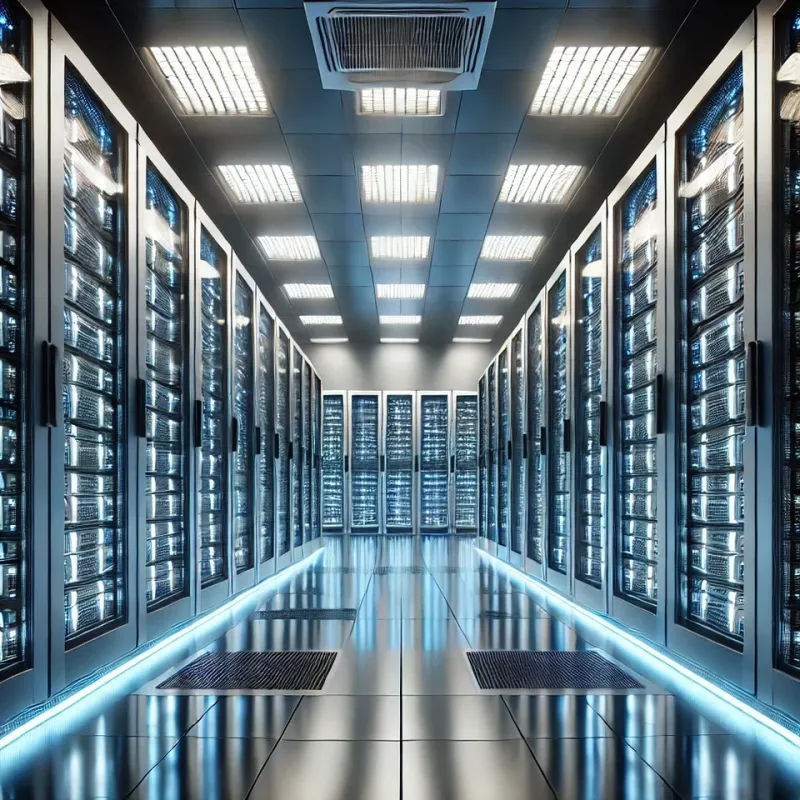
Photo: Cbrasil0, CC BY-SA 4.0, via Wikimedia Commons
When a homeowner upgrades to an energy-efficient refrigerator, the decision is typically guided by the bright yellow EnergyGuide label affixed to the door—a federally mandated disclosure that converts annual electricity consumption into a dollar figure most consumers can immediately contextualize. No equivalent label exists for AI assistants. There is no sticker on ChatGPT, no disclosure panel on Claude, no watt-hour readout following a voice command to Alexa. Yet the energy arithmetic behind these tools is both measurable and, for the power-conscious user, worth understanding in granular detail.
At Ampergram, our focus is on metrics that matter—and few metrics carry more long-term consequence than the per-query energy cost of large-scale AI inference.
The Appliance Baseline
To establish a meaningful comparison, it helps to anchor the conversation in familiar consumption figures. A modern, Energy Star-certified refrigerator operating continuously draws roughly 100 to 400 kilowatt-hours (kWh) per year, depending on capacity and ambient temperature. That translates to an average of approximately 1.1 kWh per day, or just under 46 watt-hours per hour of operation. A conventional incandescent bulb running for ten hours consumes 600 watt-hours. A dishwasher cycle uses roughly 1.2 to 1.5 kWh per run.
These are the benchmarks against which AI inference must be measured—not in aggregate server farm terms, but at the per-interaction level that a consumer can realistically evaluate.
What a Single Query Actually Costs
Researchers at the University of California, Riverside published estimates in 2023 suggesting that a single ChatGPT query—depending on prompt length and response complexity—consumes approximately 0.001 to 0.01 kWh. At first glance, that figure appears negligible. However, the relevant unit of analysis is not the isolated query but the daily usage pattern.
Consider a professional who issues 50 substantive prompts per workday to a large language model (LLM): drafting emails, summarizing documents, generating code snippets, and conducting research queries. At the high end of the per-query estimate, that user's daily AI interaction consumes 0.5 kWh—comparable to running a mid-size window air conditioner for approximately 30 minutes, or powering a laptop continuously for five to six hours.
Scale that to a monthly figure—roughly 1,000 queries—and the number approaches 10 kWh per user per month. Across the reported 100 million weekly active users of ChatGPT alone, the aggregate monthly inference load reaches into the hundreds of millions of kWh. That is not a rounding error. That is the output of multiple utility-scale power plants.
The Infrastructure Behind the Answer
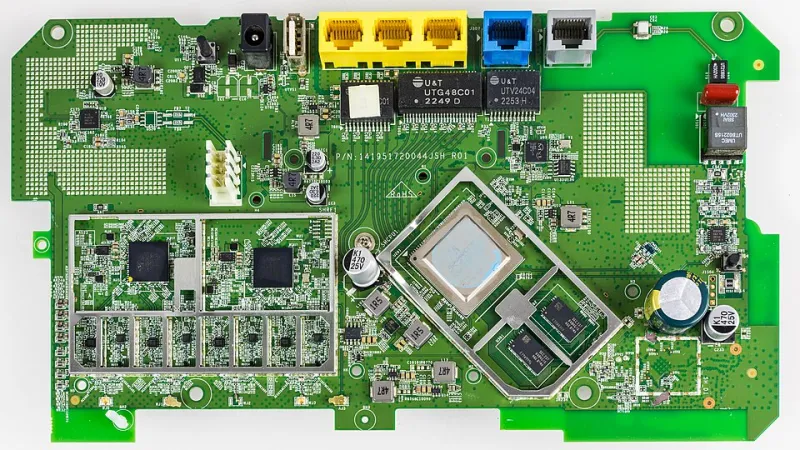
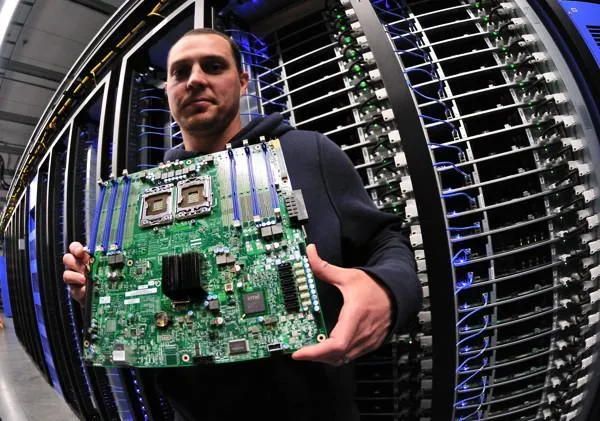
Understanding where that energy is consumed requires a brief tour of AI inference architecture. When a user submits a prompt to a cloud-hosted LLM, the request is routed to a data center housing clusters of graphics processing units (GPUs) or purpose-built AI accelerators such as NVIDIA's H100 or Google's Tensor Processing Units (TPUs). These chips are purpose-optimized for the matrix multiplication operations that underpin neural network inference, but they are not energy-light devices.
A single NVIDIA H100 GPU carries a thermal design power (TDP) rating of 700 watts. A typical inference cluster might deploy thousands of such units. Even accounting for the parallelization that distributes individual queries across many chips, the per-query energy draw reflects a system operating at sustained high utilization—particularly during peak demand windows.
Data centers also carry overhead loads beyond raw compute: cooling systems, power distribution units, networking hardware, and storage arrays all contribute to what the industry tracks as the Power Usage Effectiveness (PUE) ratio. A PUE of 1.2—considered efficient by current standards—means that for every watt consumed by computing hardware, an additional 0.2 watts is consumed by facility infrastructure. The leading hyperscalers—Microsoft Azure, Google Cloud, Amazon Web Services—publish PUE figures that hover between 1.1 and 1.3 for their newest facilities, but legacy data centers in the United States often operate at PUEs well above 1.5.
Voice Assistants: A Different Load Profile
Large language model queries represent the high end of the AI energy spectrum. Voice assistants such as Amazon Alexa, Apple Siri, and Google Assistant operate on a lighter but more frequent interaction model. Individual voice queries typically require less compute than a full LLM prompt—processing occurs partly on-device and partly in the cloud—but the sheer volume of interactions introduces its own scale problem.
Amazon reported in 2022 that Alexa had processed tens of billions of voice interactions. Even at a conservative 0.0003 kWh per interaction, the annual energy footprint of a single assistant platform enters the range of millions of kWh annually. The always-on listening state of smart speakers adds a continuous baseline draw of 1 to 3 watts per device—a figure that compounds significantly across the estimated 175 million smart speakers currently active in American households.
Actionable Benchmarks for Power-Conscious Users
For readers who wish to incorporate AI energy consumption into their own utility awareness, several practical frameworks are worth adopting.
Track interaction volume, not just device usage. Most consumers monitor electricity consumption at the appliance level, but AI energy costs are invisible at the outlet. Maintaining a rough log of daily AI interactions—and applying the 0.001 to 0.01 kWh per-query estimate—provides a useful proxy metric.
Prefer on-device inference where available. Apple's on-device AI features, for example, process certain requests locally using the Neural Engine embedded in its chips. On-device inference eliminates the data center overhead entirely, making it significantly more energy-efficient per interaction than cloud-routed queries.
Evaluate necessity before prompting. A search engine query typically costs an order of magnitude less energy than an LLM-generated response. For straightforward factual lookups, traditional search remains the more efficient tool by a measurable margin.
Monitor smart speaker idle consumption. Using a smart plug with energy monitoring capability to measure the baseline draw of always-on voice assistant devices provides concrete data that many users find unexpectedly high when annualized.
The Measurement Gap
The fundamental challenge in quantifying AI energy consumption is the absence of standardized disclosure. Unlike physical appliances—where federal regulations compel manufacturers to publish consumption data—cloud AI services operate behind opaque infrastructure with no consumer-facing energy metrics. The result is a significant measurement gap that leaves even technically sophisticated users unable to make fully informed decisions about their digital tool choices.
Several advocacy organizations and academic groups are currently pushing for AI energy transparency standards, and the European Union has begun preliminary work on disclosure requirements under its AI Act framework. In the United States, no equivalent federal mandate currently exists.
Until standardized metrics arrive, the burden falls on users and researchers to construct their own benchmarks—exactly the kind of analytical work that distinguishes a power-aware digital consumer from one operating entirely in the dark. The current sits behind every query. The question is whether you choose to measure it.