Parked but Not Passive: The Surprising Electrical Appetite of America's Connected Vehicle Fleet
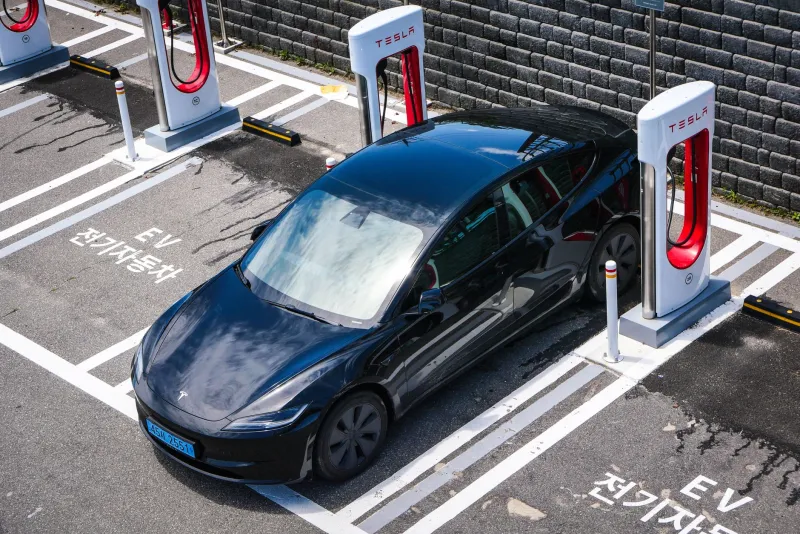
The conversation around electric and connected vehicles has, understandably, centered on propulsion. Range anxiety, charging infrastructure, and regenerative braking efficiency dominate the technical discourse. Yet a quieter and arguably more consequential power story is unfolding in driveways, parking structures, and curbside charging stations across the United States every single night. Modern vehicles — whether fully electric, hybrid, or simply network-connected internal combustion models — are consuming electricity continuously, regardless of whether they have traveled a single mile that day.
The scale of this phenomenon, when measured against America's registered vehicle fleet of more than 280 million units, produces numbers that deserve serious analytical attention.
What "Parked" Actually Means in a Connected Vehicle
To understand the scope of idle vehicle consumption, it helps to enumerate precisely what a modern connected car is doing when its owner assumes it is doing nothing.
Telematics systems maintain persistent cellular connections to manufacturer cloud servers, transmitting location data, battery state metrics, and diagnostic telemetry at regular intervals. Keyless entry modules remain in a continuous low-power polling state, listening for proximity fobs. Climate preconditioning systems — a feature marketed heavily by Tesla, Rivian, Ford, and virtually every major EV manufacturer — allow owners to remotely warm or cool cabin interiors before departure, a process that draws between 3 and 5 kilowatts for anywhere from 10 to 30 minutes.
Over-the-air software update infrastructure represents perhaps the least visible contributor. These systems must maintain enough active processor state to receive, authenticate, and stage update packages, a process that can initiate at any hour based on manufacturer scheduling rather than owner preference.
Individually, each of these functions draws modestly. Collectively, and sustained across hours of overnight parking, the picture changes substantially.
Measuring the Baseline Draw
Independent testing conducted by automotive data firms and academic research groups has placed the continuous parasitic draw of a fully connected EV — not charging, simply maintaining its networked systems — at between 1 and 4 watts in deep sleep modes, rising to 20 to 40 watts during active telematics transmission cycles. When climate preconditioning is factored in as a periodic event rather than a continuous one, average overnight consumption for a single connected vehicle can reasonably be estimated at 0.3 to 1.2 kilowatt-hours per night.
That range may appear inconsequential in isolation. Against the backdrop of America's vehicle fleet, the arithmetic becomes considerably more striking.
If one conservatively assumes that 15 percent of registered U.S. vehicles — roughly 42 million units — qualify as meaningfully connected or electrified, and that each consumes an average of 0.5 kilowatt-hours nightly while parked, the resulting aggregate demand approaches 21 gigawatt-hours per night. Sustained across a full year, that figure exceeds 7.6 terawatt-hours — a quantity comparable to the annual residential electricity consumption of a mid-sized American state.
The more disquieting aspect of this figure is its timing. Vehicle connectivity draw concentrates precisely in the late-evening and overnight hours that utilities have historically designated as off-peak recovery windows. The grid, in other words, is losing a portion of its rest period to a load profile it was not designed to accommodate.
The Manufacturer Incentive Problem
Automakers have compelling commercial reasons to keep vehicles continuously connected. Real-time data informs product development cycles, enables proactive warranty interventions, supports subscription revenue from remote access features, and provides the raw telemetry that feeds machine learning models for autonomous driving refinement.
None of these incentives align with minimizing idle power consumption. On the contrary, richer and more frequent data transmissions serve manufacturer interests at direct cost to the grid and, in the case of battery-electric vehicles, to the vehicle's own stored energy reserves.
Some manufacturers have introduced configurable "energy saving" modes that reduce telematics polling frequency during extended parking periods. Adoption of these settings among general consumers remains low, partly due to obscure menu placement and partly because the energy implications are rarely communicated in terms that register as meaningful to the average owner.
A vehicle that loses 0.8 kilowatt-hours overnight to idle connectivity represents, in practical terms, roughly 2 to 3 miles of lost range for the following morning's commute. Framed that way, the issue becomes considerably more tangible to the individual driver — and considerably more relevant to fleet operators managing hundreds or thousands of units.
Fleet Operators Are Beginning to Notice
Commercial fleet managers, who track energy costs with a precision that individual consumers rarely apply, have been among the first to formally quantify idle vehicle consumption as a budget line item. Logistics companies operating mixed EV fleets have reported overnight depot consumption figures that exceed early projections by margins attributable, at least in part, to persistent telematics activity across vehicles sitting unscheduled for eight to twelve hours.
This has prompted some fleet operators to implement network-level controls that suppress cellular connectivity on parked vehicles outside of designated maintenance windows — a workaround that requires technical infrastructure most individual owners do not possess.
Utility companies serving regions with high EV adoption density, including utilities in California, Texas, and the Pacific Northwest, have begun incorporating connected vehicle idle load into their overnight demand modeling. The adjustment is modest today. The trajectory, given EV adoption projections through 2030, is less so.
The Update Problem Nobody Discusses
Over-the-air updates deserve particular scrutiny as a grid-impact vector. Unlike telematics polling, which draws power in brief, frequent bursts, a software update event can require sustained processor activity for 20 minutes to over an hour, elevating a vehicle's power draw by an order of magnitude above its typical idle state.
Manufacturers schedule these updates during off-peak hours as a courtesy to owners who prefer not to have vehicle systems occupied during the day. The unintended consequence is a coordinated, manufacturer-initiated load event affecting potentially millions of vehicles simultaneously within a narrow overnight window — precisely the kind of synchronized demand spike that grid operators find most difficult to accommodate.
This is not a hypothetical concern. Grid analysts in California documented anomalous overnight demand events coinciding with large-scale EV software rollouts as early as 2022, though the causal attribution remains a subject of ongoing study rather than settled fact.
Toward Smarter Standby Standards
The path toward resolution runs through several parallel channels. Regulatory frameworks governing vehicle energy consumption — currently focused almost exclusively on propulsion efficiency — could be expanded to include standby power standards analogous to those already applied to consumer electronics under Department of Energy guidelines.
Manufacturers could be required to publish idle consumption specifications with the same prominence given to range and charging speed, enabling consumers and fleet buyers to make informed comparisons. Grid operators could pursue formal data-sharing agreements with automakers to receive advance notice of scheduled update deployments, allowing demand response programs to compensate accordingly.
None of these interventions is technically complex. Each requires a recognition that the vehicle parked in the driveway is no longer a passive object — it is a continuously operating networked device, drawing power, transmitting data, and contributing to a baseline grid burden that grows with every new connected model that rolls off the assembly line.
America's fleet is parked. It is not, by any useful measure, off.