Climate Control's Hidden Appetite: When Your Smart Thermostat Outdraws Your HVAC System
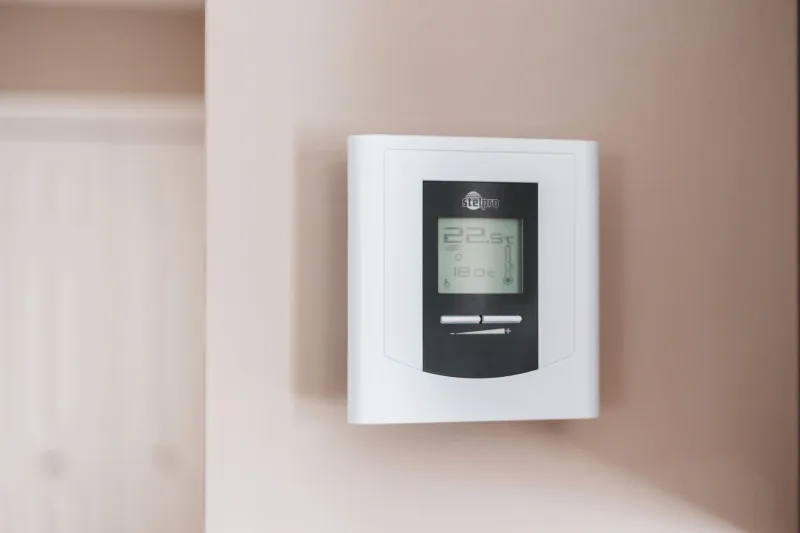
The promise embedded in every smart thermostat advertisement is essentially the same: install this device, let it learn your schedule, and watch your energy bills contract. It is a compelling proposition, and for millions of American households, it has become a point of genuine pride—a small rectangular emblem of technological responsibility mounted on the wall. The problem is that the arithmetic behind that promise is rarely presented in full.
When engineers and grid analysts begin disaggregating the actual power flows involved in smart climate control, a counterintuitive picture emerges. The intelligence layer of these systems—the processors, radios, sensors, and cloud connections that make them "smart"—operates continuously, around the clock, regardless of whether the heating or cooling equipment is running. That persistent draw, compounded across tens of millions of installed units in the United States, constitutes a non-trivial addition to the national baseload that receives almost no attention in consumer-facing efficiency discussions.
The Anatomy of a Phantom Load
A conventional electromechanical thermostat—the kind with a simple bimetallic strip and a dial—draws somewhere between 0.5 and 2 milliwatts during normal operation. It is, for all practical purposes, electrically invisible. A contemporary smart thermostat occupies an entirely different consumption category.
Devices in this class typically incorporate a Wi-Fi radio that maintains a persistent connection to a cloud server, refreshing status data at intervals measured in seconds. They embed multiple thermal sensors, humidity detectors, and in many models, occupancy sensors using passive infrared or even millimeter-wave radar technology. They run embedded processors capable of executing machine learning inference routines locally, while simultaneously syncing scheduling data, weather forecasts, and firmware updates from remote servers.
Independent laboratory measurements, including those conducted by researchers at Lawrence Berkeley National Laboratory and corroborated by utility-sponsored audits in California and New York, place the standby power consumption of leading smart thermostat models between 1.5 and 4 watts. Several premium devices with color displays and integrated voice assistants have been measured at or above 5 watts under normal operating conditions.
At 3 watts continuous—a reasonable midpoint for a mid-tier device—a single smart thermostat consumes approximately 26.3 kilowatt-hours per year in baseline operation alone, before a single heating or cooling cycle is initiated.
Scaling the Signal
The United States currently has an estimated 35 to 40 million smart thermostats installed in residential and light commercial buildings, a figure that has grown substantially since federal tax incentive structures began rewarding their adoption. Applying a conservative average draw of 2.5 watts per device yields an aggregate continuous load of roughly 87.5 to 100 megawatts—comparable to the continuous output of a small natural gas peaker plant, running perpetually and exclusively to power the decision-making apparatus of climate control systems.
Annually, that translates to somewhere between 765 and 876 gigawatt-hours of electricity consumed by the smart layer alone. For context, the U.S. Energy Information Administration estimates that the average American household uses approximately 10,500 kilowatt-hours per year in total. The collective intelligence overhead of the nation's smart thermostat fleet thus represents the equivalent annual consumption of roughly 73,000 to 83,000 average homes.
These numbers do not appear on any energy star certification label. They are not factored into the savings projections displayed on retail packaging.
The Efficiency Claim Under Scrutiny
Manufacturers of leading smart thermostat platforms cite average annual savings figures typically ranging from 10 to 23 percent on heating and cooling costs. For a household spending $1,200 annually on HVAC operation, that implies savings of $120 to $276 per year, or roughly 1,260 to 2,900 kilowatt-hours depending on local fuel mix and rate structure.
Those savings are real, and the underlying mechanisms—geofencing, occupancy-based setback, weather-responsive pre-conditioning—are technically sound. The issue is not whether smart thermostats save energy; under typical conditions, they do. The issue is whether the savings are being measured against a complete cost basis.
When the continuous parasitic draw of the device itself is subtracted from the projected savings, the net efficiency advantage narrows considerably. For households in mild climates where HVAC runtime is already limited—much of the Pacific Coast and portions of the Mountain West—the margin between gross savings and device overhead can compress to single-digit percentages. In some audited cases involving smaller homes with modest heating loads, the net benefit has been measured at less than 5 percent over a comparable programmable thermostat, a device that costs a fraction of the price and draws a fraction of the power.
The Cloud Dependency Multiplier
The on-device power figure, while significant in aggregate, represents only part of the true energy footprint. Every smart thermostat that communicates with a manufacturer's cloud platform is also drawing on data center infrastructure—servers that process scheduling requests, store behavioral profiles, run predictive algorithms, and push software updates.
Data center energy attribution at the per-device level is methodologically complex, but published estimates from cloud infrastructure research suggest that a single active IoT device generating continuous telemetry to a managed cloud backend contributes between 0.2 and 0.8 watts equivalent in data center load when amortized across shared infrastructure. Applied to the installed smart thermostat base, this implies an additional 7 to 32 megawatts of indirect grid demand that is entirely invisible to the end consumer and absent from any product-level efficiency calculation.
Measuring What Actually Matters
The deeper problem this analysis surfaces is not specific to thermostats. It reflects a systemic gap in how connected device efficiency is evaluated and communicated in the United States. Regulatory frameworks such as the EPA's ENERGY STAR program have historically focused on the primary function of a device—how efficiently it heats, cools, illuminates, or computes—while treating the intelligence and connectivity layer as secondary or negligible.
That assumption no longer holds. As processing capability, wireless radios, and cloud dependency become standard components of virtually every consumer electronics category, the overhead of intelligence is no longer negligible. It is, in many cases, the dominant term in the power budget for devices that spend most of their operational lives in a connected-idle state.
Grid operators and utility demand planners are beginning to incorporate connected device baseloads into their modeling frameworks, but the data granularity required for accurate forecasting remains limited. What is needed is a standardized methodology for measuring and disclosing the full-cycle power consumption of smart devices—one that accounts for standby draw, sensor activity, and cloud infrastructure allocation—rather than the primary-function efficiency metrics that currently dominate certification standards.
The Thermostat as a Case Study in Incomplete Metrics
The smart thermostat is, in many respects, an ideal case study for this broader problem precisely because its efficiency credentials are so well established and so widely trusted. If a device category this thoroughly studied and this favorably regulated carries a hidden power overhead of this magnitude, the implications for other connected device classes—smart speakers, security cameras, mesh networking nodes, always-on appliances—are considerable.
Ampergram's position is not that smart thermostats are net negatives for grid efficiency. In most climates and most households, the evidence suggests they are not. The position is that the metrics being used to evaluate them are incomplete, and that incomplete metrics produce misaligned incentives—for consumers, for manufacturers, and for the utilities and grid operators who must balance the load these devices collectively impose.
Measuring only what is convenient is not measurement. It is approximation dressed as precision. The grid does not operate on approximations.