Forecasting the Surge: How Machine Learning Is Becoming the Grid's Early Warning System
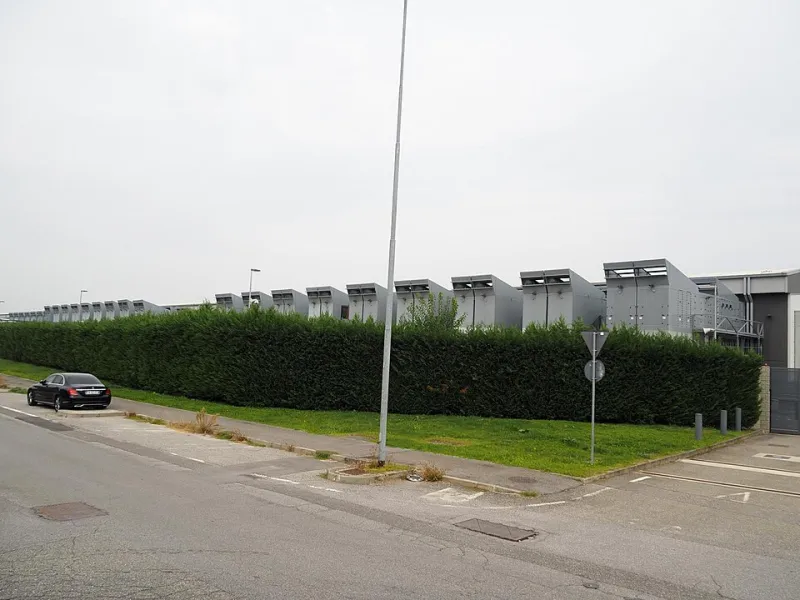
Photo: Lapalmauz, CC BY-SA 4.0, via Wikimedia Commons
For most of the twentieth century, electricity demand was a relatively legible phenomenon. Utilities could anticipate morning load ramps as alarm clocks triggered coffee makers, predict summer peaks as air conditioning loads climbed with the afternoon temperature, and plan winter capacity around heating cycles that followed meteorological patterns. The variables were physical, seasonal, and slow-moving. Forecasting was a discipline built on historical averages and weather models.
That framework is under significant strain. The variables that now drive demand spikes are increasingly social, cultural, and digital — and they can materialize in minutes.
When Engagement Becomes a Load Event
Consider what happens when a major streaming platform releases a highly anticipated series at midnight Eastern time. Tens of millions of smart televisions, streaming sticks, soundbars, and gaming consoles activate within a narrow window. Routers push traffic volumes that trigger automatic performance scaling. Data centers ramp compute resources to handle authentication requests, video encoding, and recommendation algorithm processing simultaneously. The electrical signature of that cultural moment is distributed across the country but concentrated in time.
Similar dynamics emerge around major gaming launches, live sports broadcasts, and — increasingly — viral social media events that synchronize the behavior of large user populations without any advance scheduling. A single video reaching critical mass on a short-form platform can drive a measurable uptick in mobile device charging activity and home network load within the hour.
Utilities have historically referred to unexpected demand concentrations as "load events." What is new is that the triggers for those events now originate in the digital behavioral layer rather than in the physical environment. A heat wave is foreseeable days in advance. A streaming release is announced weeks ahead. A viral moment is, by definition, not.
The Predictive Arms Race
The recognition that digital engagement patterns carry grid implications has catalyzed what can fairly be described as a forecasting competition — one in which the participants include not only traditional utilities but also the technology companies whose platforms generate the behavioral signals in the first place.
On the utility side, operators including PJM Interconnection, ERCOT, and several large investor-owned utilities have expanded their demand forecasting capabilities beyond weather-correlated models. Machine learning systems trained on historical load data are now being supplemented with external data feeds: social media activity indices, streaming platform viewership projections, and e-commerce shipping volume estimates that serve as proxies for household activity levels. The underlying hypothesis is that behavioral data can surface demand signals that purely physical models miss.
ERCOT, which manages the Texas grid and operates with relatively limited interconnection to neighboring systems, has particular incentive to refine short-term forecasting accuracy. The consequences of a missed spike in an isolated grid are more severe than in an interconnected one, and the 2021 winter storm event — while primarily a supply-side failure — underscored the cost of operating at the edge of capacity without adequate warning time.
On the technology side, the calculus is different but the data advantage is arguably larger. Hyperscale cloud providers and major platform companies possess real-time visibility into engagement metrics that no utility can access independently. When a platform operator knows that a live event is drawing 40 million concurrent viewers, it also knows — with reasonable precision — what the associated electrical load profile looks like across its own infrastructure. The question is whether that knowledge remains proprietary or becomes part of a broader grid coordination framework.
What the Data Advantage Is Actually Worth
The financial stakes of predictive accuracy in grid management are substantial. Electricity prices in wholesale markets can swing by orders of magnitude during demand peaks. A utility or grid operator that can anticipate a spike 90 minutes in advance — rather than responding to it in real time — has the opportunity to dispatch peaker plants more efficiently, activate demand response programs with sufficient lead time, and avoid purchasing power at distressed spot prices.
For large technology companies, the incentive structure runs in a complementary direction. Data centers that can shift non-time-sensitive workloads — batch processing, model training, backup operations — away from predicted peak windows reduce their own exposure to peak-hour electricity pricing, which in many markets is structured to be significantly higher than off-peak rates. Google's DeepMind has publicly documented how reinforcement learning models reduced cooling energy consumption in its data centers by approximately 40 percent; the same predictive logic applied to workload scheduling carries comparable efficiency potential.
The emerging tension is one of data ownership and coordination. Utilities need behavioral signals that tech companies generate. Tech companies benefit from grid stability that utilities are responsible for maintaining. The infrastructure for sharing those signals in a structured, reliable way does not yet exist at scale in the United States, and the regulatory frameworks that would govern such arrangements remain underdeveloped.
The Infrastructure Gap
Several pilot programs have begun to test the edges of this coordination problem. Southern California Edison has engaged in demand response partnerships with large commercial and industrial customers that use algorithmic scheduling to shift loads. The Federal Energy Regulatory Commission's Order 2222, which opened wholesale electricity markets to aggregated distributed energy resources, created a regulatory pathway for more sophisticated demand-side participation — but implementation has proceeded unevenly across regional markets.
What remains largely absent is a formal mechanism for the largest digital platforms to contribute their behavioral forecasting data to grid operators in real time. The data exists. The models to interpret it are being built. The institutional arrangements to operationalize the exchange are the missing layer.
This gap represents both a risk and an opportunity. On the risk side, as the behavioral triggers for load events become more unpredictable — driven by platform dynamics that no single actor fully controls — the probability of forecasting misses increases. On the opportunity side, the organization that successfully bridges the behavioral data layer and the grid management layer will occupy a genuinely valuable position in the energy infrastructure of the next decade.
Reading the Signal
For analysts tracking the intersection of digital platforms and power systems, the relevant metrics are not only megawatts and frequency deviations. They include engagement velocity, concurrent session counts, and the geographic distribution of platform activity — figures that are already being generated, already being analyzed, and already influencing operational decisions inside the largest technology companies in the country.
The grid has always responded to human behavior. What has changed is the speed, the scale, and the measurability of the connection. The utilities and technology firms that learn to read those signals together — rather than in parallel — will be better positioned to manage what the always-on economy continues to demand of the infrastructure beneath it.