Wired Interests: How Big Tech's Data Center Expansion Is Rewriting America's Grid Policy
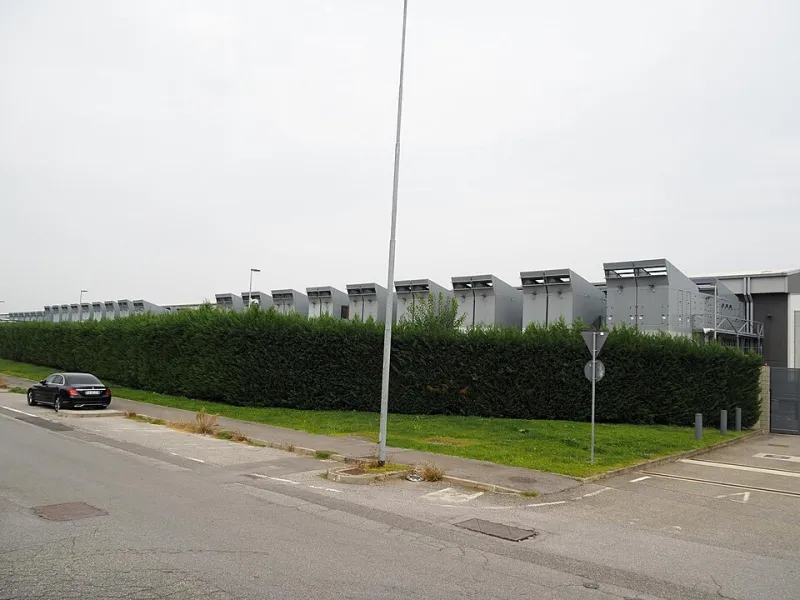
Photo: Lapalmauz, CC BY-SA 4.0, via Wikimedia Commons
Somewhere between a Senate subcommittee hearing on grid modernization and a fiber-lit server hall in Northern Virginia, a quiet but consequential negotiation is unfolding. The participants are not equal in resources, and the outcome will affect every American ratepayer. Major technology companies — operators of some of the world's most power-hungry facilities — are actively lobbying federal and state regulators to restructure the rules that govern how electricity is generated, transmitted, and priced. The stakes, measured in both amperes and dollars, have rarely been higher.
The Consolidation Calculus
Data center consolidation has accelerated sharply since 2020. Where mid-sized enterprises once operated distributed server rooms across multiple facilities, cloud migration has funneled those workloads into the hyperscale campuses of Amazon Web Services, Microsoft Azure, and Google Cloud. On the surface, this appears to be a story of efficiency: fewer buildings, newer hardware, and improved power usage effectiveness (PUE) ratios. The reality, however, is more complicated.
Consolidation does reduce per-unit energy waste. A modern hyperscale facility operating at a PUE of 1.2 is meaningfully more efficient than a legacy enterprise data center running at 2.0. But efficiency at the unit level does not translate linearly to efficiency at the grid level. When thousands of enterprise workloads collapse into a single campus drawing 500 megawatts from a regional transmission organization, the load profile changes dramatically — and so does the infrastructure required to serve it.
"We're not just talking about bigger transformers," said one transmission engineer with a mid-Atlantic regional grid operator, speaking on background because of employer restrictions. "We're talking about rebuilding interconnection queues, upgrading substations that weren't designed for this class of demand, and in some cases, routing entirely new high-voltage corridors. That costs money, and the question of who pays is not settled."
Lobbying the Kilowatt
Federal Energy Regulatory Commission (FERC) dockets from the past three years reveal a pattern. Technology companies and their trade associations — including the Information Technology Industry Council and the Data Center Coalition — have filed extensive comments opposing cost-allocation frameworks that would require large new load customers to bear a proportional share of transmission upgrade expenses. Their preferred model, broadly characterized as "socialized" cost allocation, distributes infrastructure costs across the broader ratepayer base.
Advocates for this approach argue that data centers generate regional economic benefits — jobs, tax revenue, and digital infrastructure — that justify shared investment. Critics, including several state public utility commissions and consumer advocacy organizations, contend that this framework effectively subsidizes private corporate expansion at the expense of residential and small-business ratepayers.
At the state level, the lobbying is equally vigorous. In Virginia, which hosts the largest concentration of data center capacity in the world, Dominion Energy has sought rate adjustments specifically tied to large-load industrial customers. In Texas, ERCOT has faced pointed questions about whether its grid planning models adequately account for the velocity of new data center interconnection requests. In Georgia, the Public Service Commission approved a controversial rate structure in 2023 that critics argued disproportionately benefited hyperscale tenants.
The Metrics Regulators Are Missing
Policy analysts who track grid reliability argue that current regulatory frameworks were designed for a different era of demand — one characterized by gradual, predictable load growth from residential and light industrial customers. The metrics embedded in those frameworks, such as coincident peak demand and reserve margin calculations, were calibrated accordingly.
"The problem is that data centers don't behave like traditional industrial loads," explained a senior policy analyst at a Washington, D.C.-based energy research organization. "They can ramp up or down very quickly depending on workload scheduling. That creates a kind of demand volatility that existing metrics don't fully capture."
Among the measurements she argues regulators should be tracking more rigorously: load factor variability over sub-hourly intervals, the ratio of contracted capacity to actual consumption, and the frequency with which large customers utilize demand response provisions. Each of these figures tells a more granular story about how a data center actually interacts with the grid — information that aggregate peak demand numbers obscure.
FERC has taken some steps in this direction. Its Order 2023, finalized in 2023, introduced reforms to the interconnection process intended to reduce the backlog of new generation and large-load projects waiting for grid access. However, critics note that the order primarily addressed the generation side of the queue and did not fully resolve questions about transmission cost allocation for large load customers.
Corporate Efficiency vs. Public Utility
The tension at the heart of this debate is not simply financial. It reflects a deeper philosophical disagreement about the purpose of electrical infrastructure. Utility systems in the United States were built on a model of universal service — the idea that the grid exists to serve all customers reliably and at reasonable cost. The entry of hyperscale data centers as dominant load customers strains that model in ways that are only beginning to be understood.
For their part, technology companies argue that their investments in renewable energy procurement, battery storage, and demand response programs make them responsible grid participants. Several have signed long-term power purchase agreements for wind and solar generation that, at least on paper, offset their consumption. Microsoft, Google, and Amazon have each made public commitments to match their electricity use with carbon-free generation.
But grid engineers are quick to note the difference between energy matching on an annual basis and actual real-time grid support. A data center that procures wind energy credits from a facility in West Texas does not necessarily stabilize the frequency on a grid in Northern Virginia during a summer heat event.
What Comes Next
FERC is expected to revisit transmission cost allocation rules in forthcoming rulemaking proceedings. State regulators in Virginia, Texas, and Georgia are each navigating their own versions of this tension. And the interconnection queue — currently backlogged with hundreds of gigawatts of new requests nationally — will force some resolution of the cost-sharing question whether regulators act proactively or not.
For the engineers and analysts who monitor these systems daily, the message is consistent: the metrics that matter most are not the ones currently featured in most regulatory filings. Load factor, sub-hourly variability, and the gap between contracted and actual demand are the figures that reveal how the grid is truly being used — and who is bearing the cost of serving it.
The amperage is real. The policy frameworks to measure it accurately are still being written.